We worked to enhance the climate resilience of two historic heritage structures that are locally important to communities: Alva’s Cochrane Hall in Clackmannanshire and Valleyfield Woodland Park’s gardeners’ cottage, near High Valleyfield in west Fife.
The historic built environment of the Inner Forth has been shaped by the rich resources of the area, which is linked to the natural heritage present: from extensive coal and limestone deposits, fertile agricultural landscapes and, of course, the Forth itself, taking products of industry and agriculture around Scotland, the UK and beyond.
Cochrane Hall, Alva:
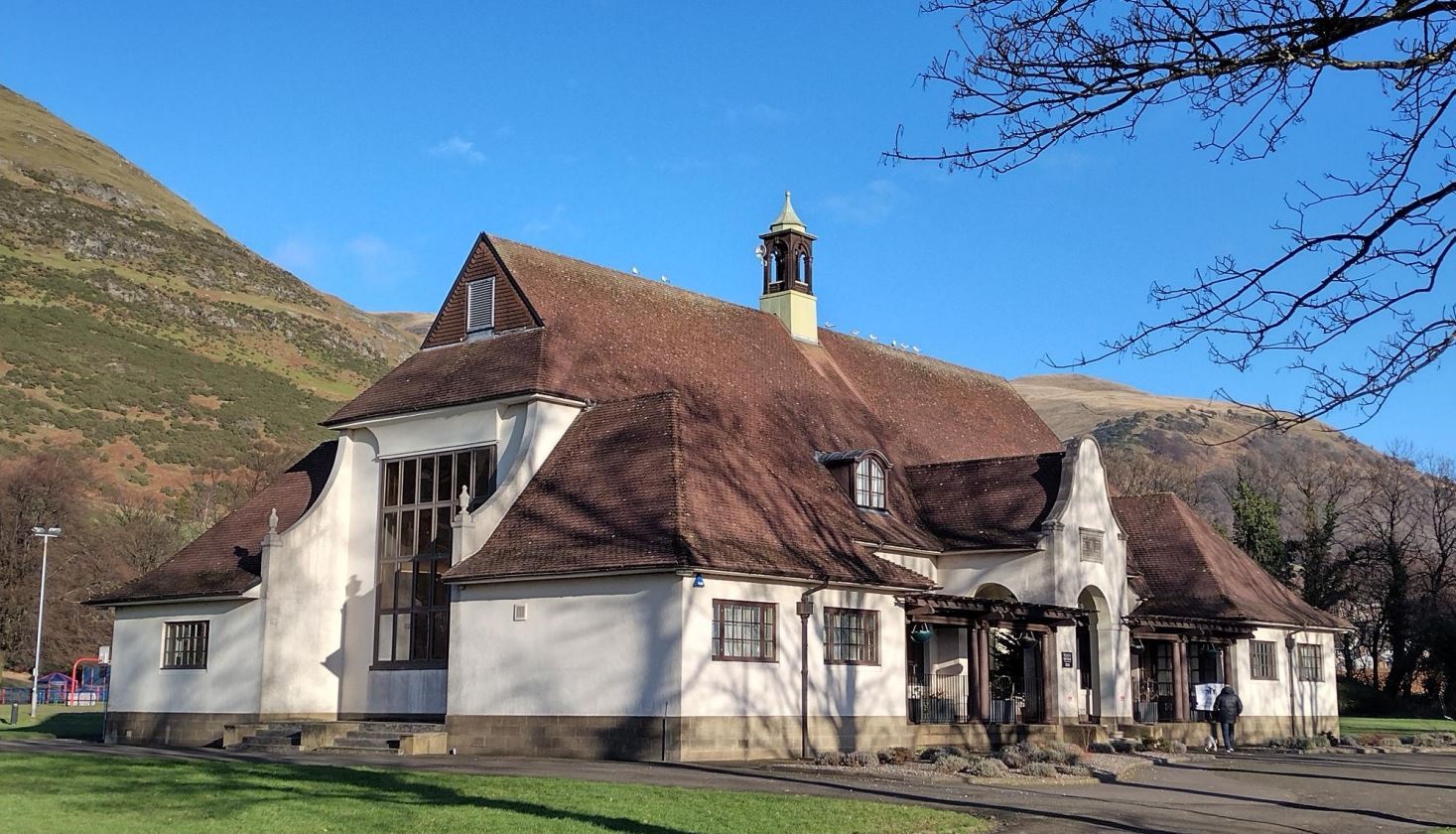
The Climate FORTH project worked with Alva Development Trust at Cochrane Hall to increase the climate resilience of the C-listed building. The hall is a locally important community hub, as well as being recognised for its unique architectural features. Opened in 1929, it was funded by the Cochrane Brothers, who were born in Alva, but subsequently moved to Philadelphia in the United States, where they became successful businessmen.
Whilst Clackmannanshire Council own the listed building, it has been leased by Alva Development Trust since 2018, to advance community development and provide recreational facilities.
In recent times, however, the aging windows caused the building to lose heat and feel draughty – especially in winter. In November 2024, with funding from The National Lottery Heritage Fund, thanks to Lottery players, Climate FORTH and Alva Development Trust enlisted the help of Scottish Window Solutions to upgrade the old windows to new Crittall style windows. The windows complement the look of the hall and will improve the energy performance of the building, too.
The works were completed in time for winter 2024. Cochrane Hall forms part in shaping a route-map to net carbon zero that could be replicated at similar critical community facilities across the Inner Forth and beyond.
Valleyfield is a remarkable lost garden, gradually decaying as a consequence of a lack of investment and prioritisation. The site has the potential to become a vibrant destination for the community and visitors from further afield, and along with Fife Council, work has been undertaken to uncover and unlock the heritage of the landscape.
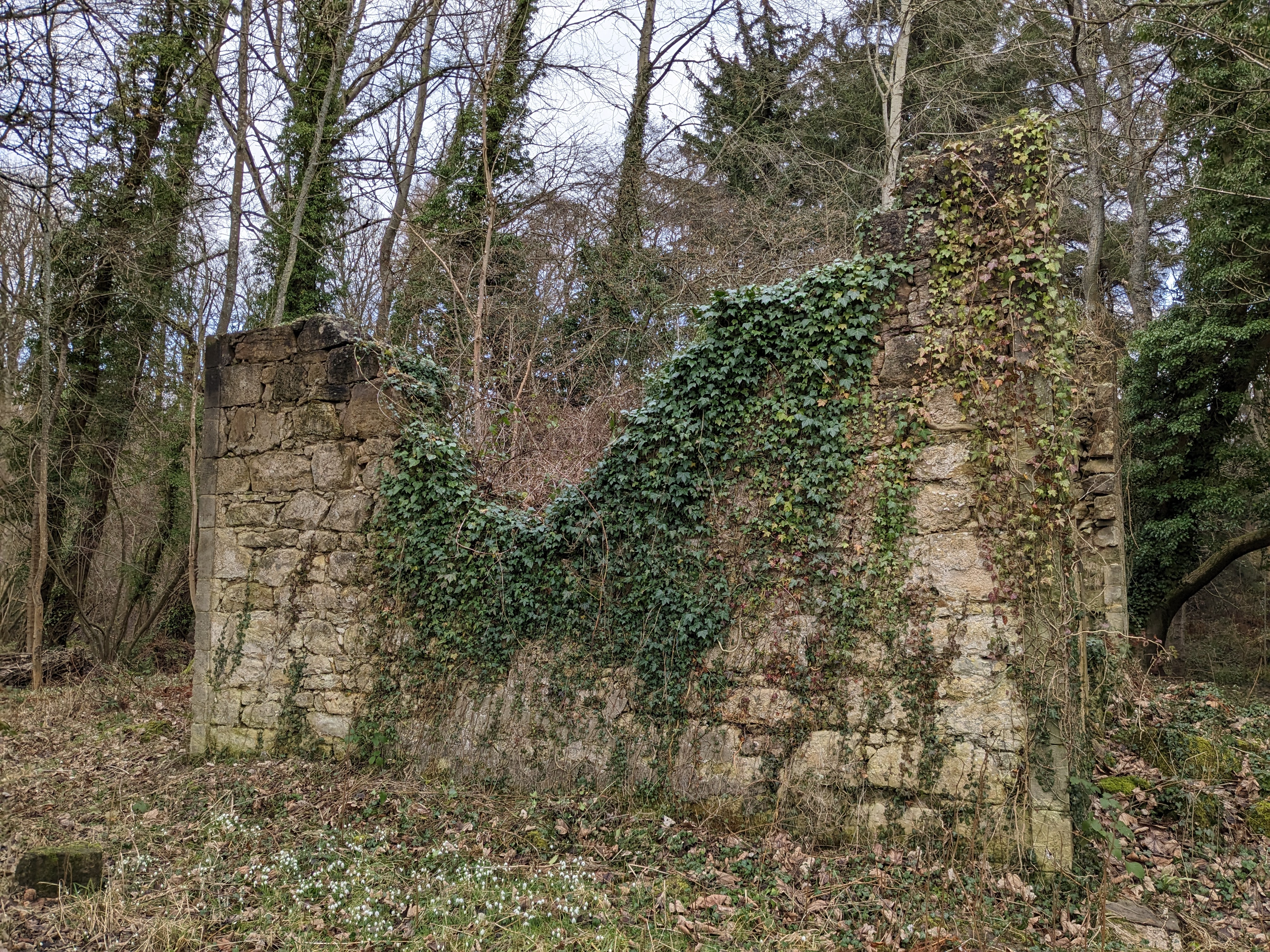
Following months of clearing the site of vegetation and careful stonemasonry works, the Gardener's Cottage structure has now been consolidated and will soon feature a creative arts element to benefit and involve the local community. This artistic activity will share and promote the park's rich history - and links to famous Scottish Botanist, David Douglas (whom the Douglas fir tree is named after).
We encourage you to visit Valleyfield Woodland Park and take part in our interactive audio tour, which has been developed to bring this heritage site to life. DOWNLOAD and enjoy the content, which is available below:
VALLEYFIELD AUDIO TOUR
INTRODUCTION Welcome to Valleyfield Woods.
The area has changed many times over the years – from grand estate, to industrial landscape, to community woodland.
Its story reminds us that landscapes can recover, adapt and care for people again, especially when communities work together.
In this tour, the voice of Scottish botanist David Douglas describes his story and points out features around the estate.
As you move to different points on the paths, audio will start playing on the izi app. We’ve also provided more links to extra information and activities in the descriptions on the app. Thanks for being a nature adventurer and plant hunter. We hope you will continue to act and care for all the nature you encounter and the beautiful places you live in and visit. This trail is a Climate FORTH activity and has been brought to you by the Inner Forth Futures partnership and funded by The National Lottery Heritage Fund.
WELCOME / DOUGLAS FIR
Welcome to the Valleyfield heritage garden trail. The trail starts at the Douglas Fir in front of you. This fir is native to North America and it’s one of the plants I brought over to the UK in 1827 – in fact, it’s named after me. My name is David Douglas and I’m your guide today. This one may be small, but Douglas firs can grow to be 55m high and live for more than 1,000 years. Although they’re not native to Scotland, Douglas firs provide habitat for our native red squirrels and pine martens. The seeds are eaten by finches and small mammals and spruce carpet and dwarf pug moths feed on the needles. Nature has always been fascinating to me. I was born in Scone, near Perth, in June 1799. My father was the stonemason on the new Scone Palace, and I attended the local school with my brothers and sisters.
It was a three-mile walk and many days I never made it as I was much more interested in the countryside, fishing and wildlife. I would often rescue baby birds and animals to be my pets. There are many beautiful birds in the garden here. Do look out for red squirrels in the trees.
GARDENER'S COTTAGE
The gardener’s cottage used to have two storeys and was the home to the head gardener of the estate. It was built in 1778, (the same year Captain Cook discovered Hawaii).
If you look up, you’ll see the date stone in the top corner.
Originally it was next to the kitchen garden … now a community orchard. Humphry Repton, the famous garden designer who planned Valleyfield, believed that kitchen gardens should be close to the house as they brought an understated beauty to the place. Only ruins remain today, but thanks to work by Fife Council and the Climate FORTH project in 2026, these have been stabilised and the building is now strong enough to cope with whatever the weather throws at it.
Early stages of consolidation at the Gardener's Cottage (May 2024): site clearing and removal of overgrown vegetation before further works started
Alva's Cochrane Hall before the new window installation phase
Work taking place to replace the Crittal windows at Cochrane Hall in Alva
Alva Development Trust and Historic Environment Scotland get a first look at the new Crittall style windows, enjoying views to the Ochil Hills in Clackmannanshire.
All finished: windows complete at Cochrane Hall.
Stonemasonry work in progress: July 2025
November 2025: all finished!
Project Location
Funded by
Plus visitor contributions from our Visitor Giving Scheme



.jpg)
.jpg)
.jpg)
.jpg)